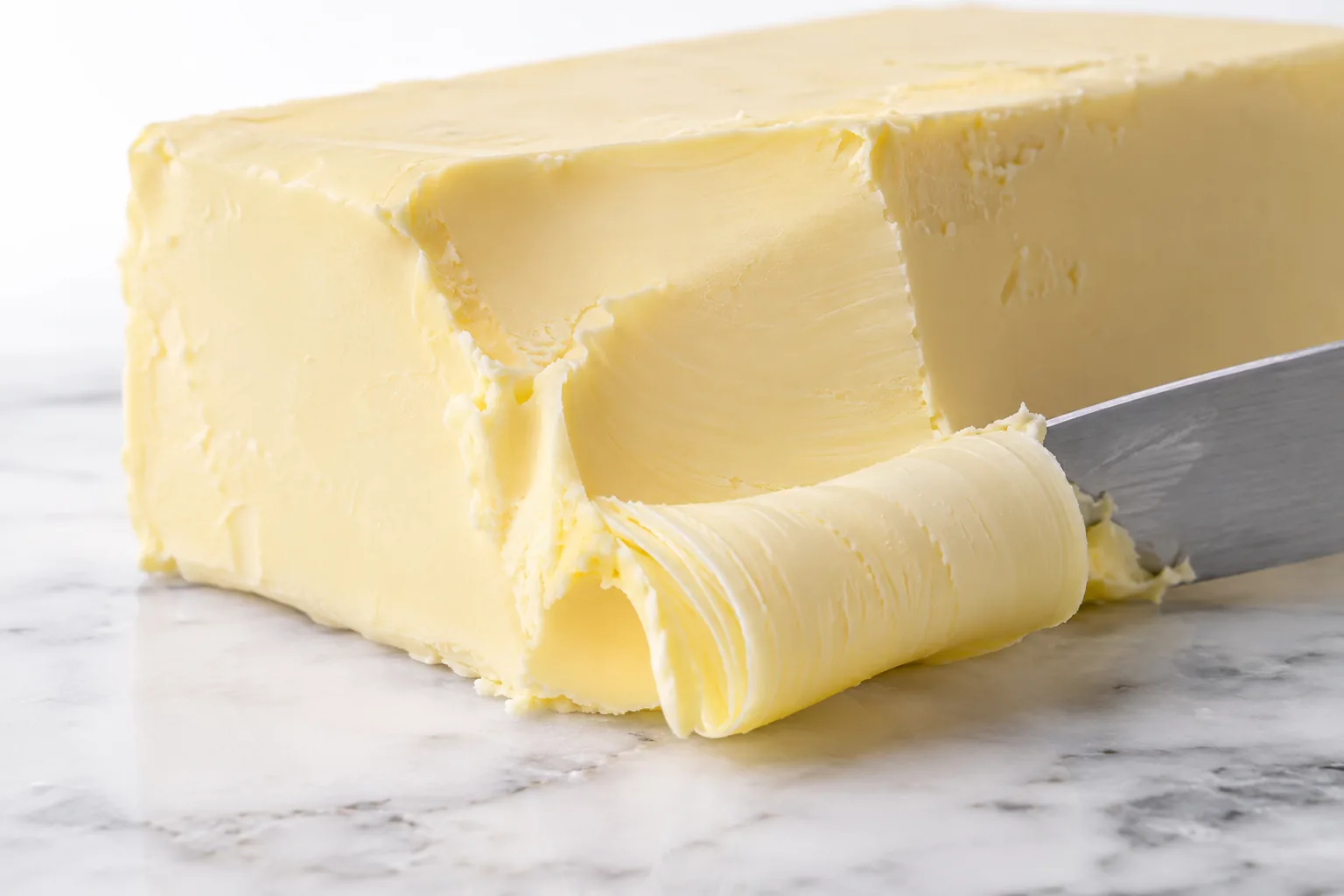
Bakery Fats: Plasticity, Aeration and Layers
The right fat for a biscuit may be wrong for a cake or a croissant.
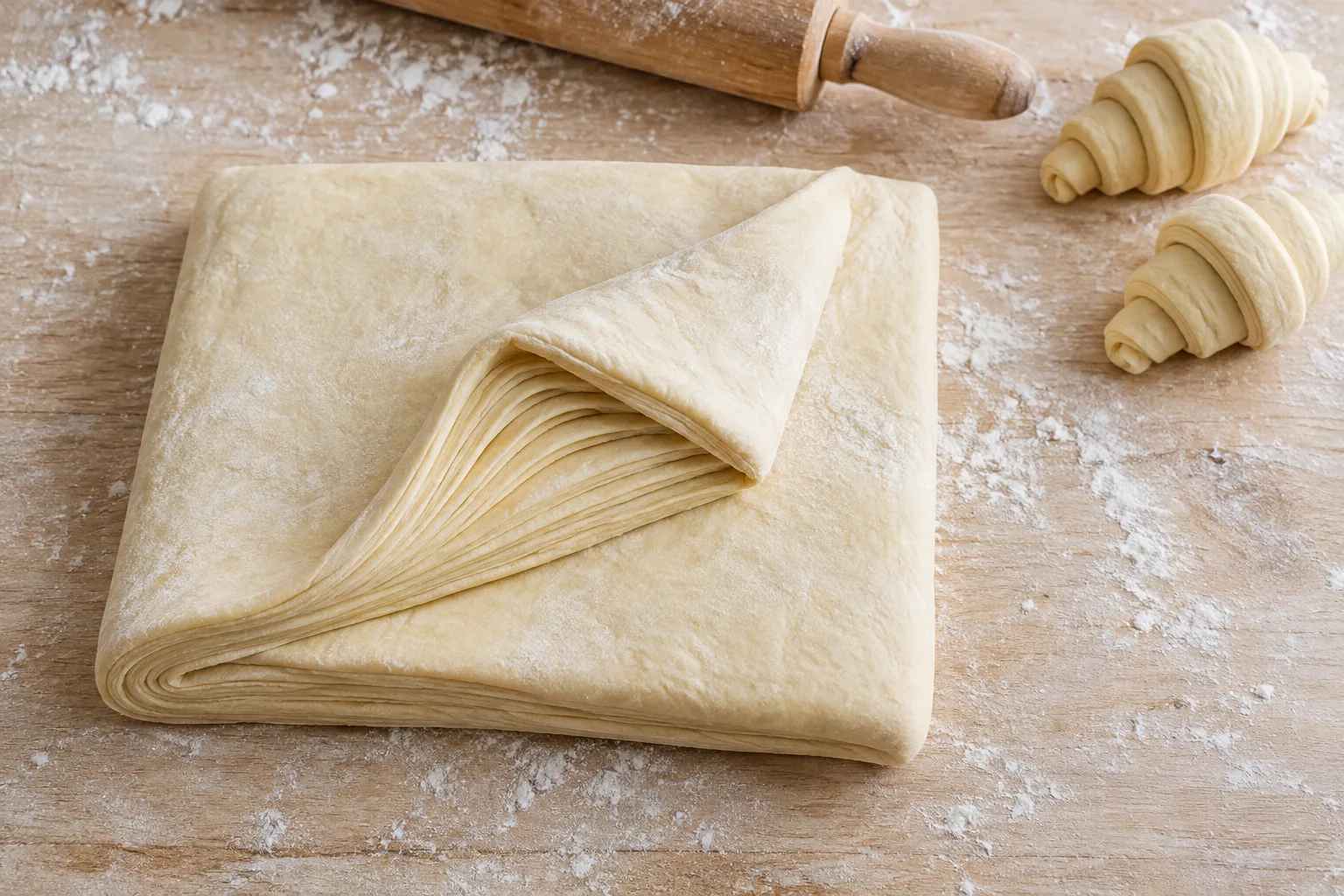
Bakers use fat to make doughs tender, hold air in batters and build the layers in pastry. One fat is rarely ideal for all three.
This article looks at what fat does in biscuits, cakes and laminated pastry, which properties matter for each and why a change of fat is really a change of recipe.
Three products. Three jobs.
The same fat does different work in each product.
In biscuits the fat coats flour particles and limits gluten development, which gives a short, tender bite. In cakes it helps trap air during creaming, which sets the volume and crumb. In laminated pastry it forms thin sheets between layers of dough, and when water turns to steam in the oven, those layers lift apart.
- The fatty-acid profile alone misses how a fat handles on the line.1
Biscuits: handling and spread.
A fat change can shift dough flow, spread, thickness and breakage.
A biscuit line runs on consistency. A different fat can change how the dough mixes, how it flows during forming and how far each piece spreads in the oven, which then changes size, weight and breakage. When comparing fats, keep dough temperature, mixing order and resting time the same, and measure both the line and the finished biscuit.
- Sugar, flour, water and mixing energy all interact with the fat.
- Measure the line and the finished biscuit.
Equal fat mass does not ensure equal aeration or crumb.
Cakes: air is the product.
During creaming, a plastic fat helps trap and hold small air cells.
Much of a cake's volume comes from air beaten in during creaming, and a plastic fat is good at holding those small air cells. A liquid oil holds air differently, so swapping one for the other usually means changing the mixing method or adding an emulsifier. The right choice also depends on the cake, from sponge to high-ratio cake to muffin.
- Equal fat mass does not mean equal aeration or crumb.
- Sponge, high-ratio cake and muffin behave differently.
Pastry: protect the layers.
Firm enough not to smear. Pliable enough not to crack.
Laminating fat has to work within a narrow range. Too soft and it smears into the dough and the layers merge; too hard and it cracks and tears the sheets. Dough temperature, fat temperature, resting time and the number of folds all move that range, which makes temperature control as important as the fat itself.
- Dough temperature, rest time and folds all move the window.
- Replacing saturated fat needs full application trials.2
In short.
Choose a bakery fat by the job it has to do in that product. Match its solid-fat content and plasticity to your process temperatures, test it in the full recipe on the real line and treat any change of fat, including a lower saturated-fat option, as a change to the whole recipe.
Before you choose.
- 1Name the product's job.
- 2Map process temperatures.
- 3Check SFC not only the profile.
- 4Test the full recipe.
- 5Assess line and finished product.
Bakery performance depends on physical state as much as profile. The right SFC differs for biscuits, cakes and pastry.
Oleogels and structured oils aim to keep function while changing composition. Validation is product-specific.
Begin with the product and the line.
Talk to our teamReferences (2)
- da Silva, T. L. T. & Martini, S. (2024). Recent advances in lipid crystallization in the food industry. Annual Review of Food Science and Technology, 15, 355–379. doi.org/10.1146/annurev-food-072023-034403
- Das, M. & Das, A. (2024). A comprehensive review on strategies for replacing saturated fats in bakery products. Discover Food, 4, 156. doi.org/10.1007/s44187-024-00240-2
General principles for formulators. Not recommendations for a particular product, process or herd.