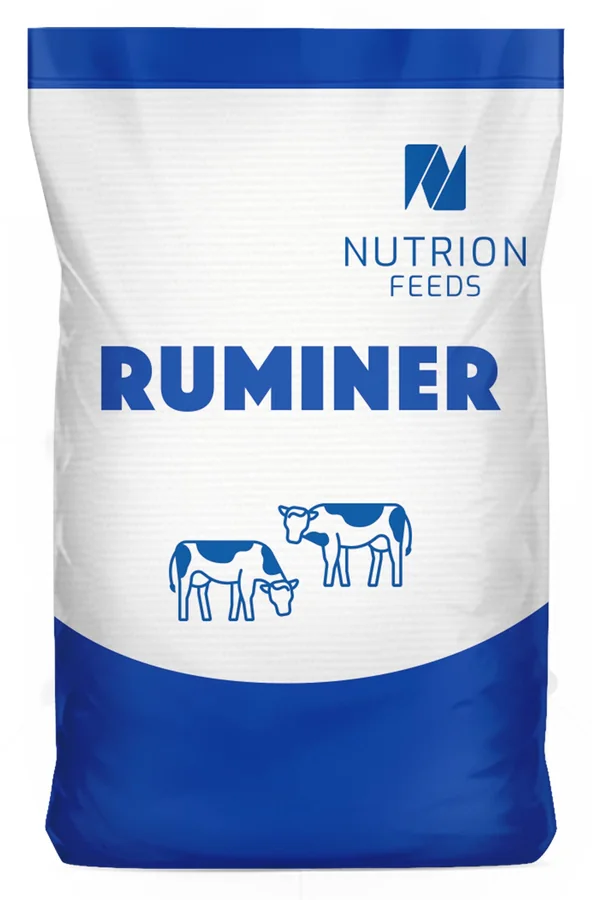
Calcium salts
of palm fatty acids
How it is protected
Insoluble at normal rumen pH. Released by acid in the abomasum.
Fatty acids
C16:0C18:1C18:2
Often chosen for
Overall energy and milk yield, especially in early lactation.
Our gradeRUMINER›Bypass fat guide
Also called rumen-protected fat. What it is, the main types, how much to feed and how to choose the right one for your herd.
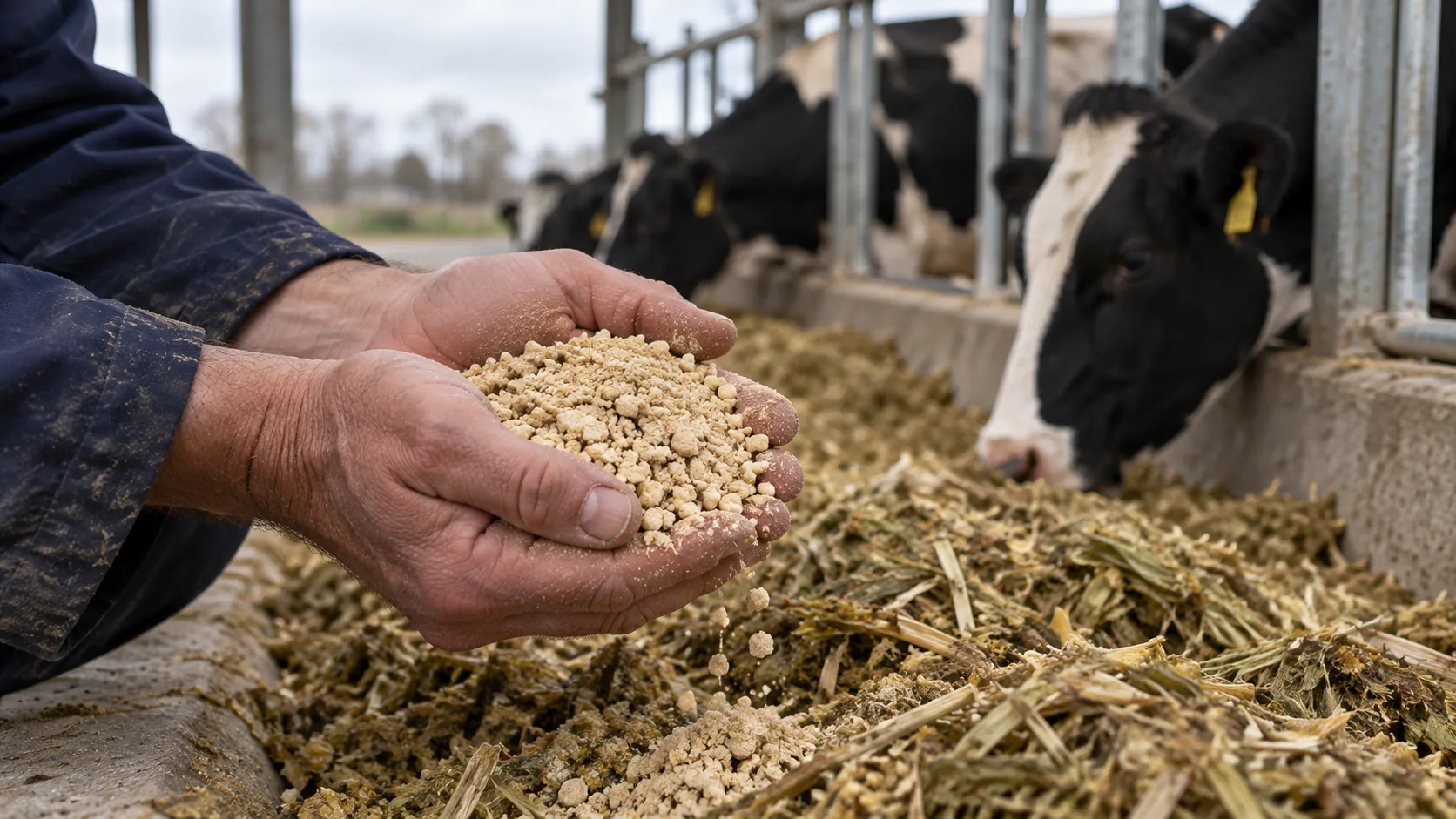
Bypass fat, also called rumen-protected fat, is a fat supplement made to pass through the rumen largely unchanged, then be digested and absorbed in the small intestine.
It adds concentrated energy to a dairy ration without getting in the way of the rumen microbes that digest fibre. Ordinary oils are different: in the rumen they can disturb fibre digestion and lower milk fat.
Fat carries roughly twice the energy of starch or protein, so a little adds a lot of energy to the ration.
After calving, cows make more milk than they can eat for. Extra energy helps close that gap.
Protected fat passes the microbes largely untouched, so fibre digestion carries on as normal.
All are called bypass fat. They are protected in different ways and carry different fatty acids, so they do different jobs.
of palm fatty acids
How it is protected
Insoluble at normal rumen pH. Released by acid in the abomasum.
Fatty acids
C16:0C18:1C18:2
Often chosen for
Overall energy and milk yield, especially in early lactation.
Our gradeRUMINER›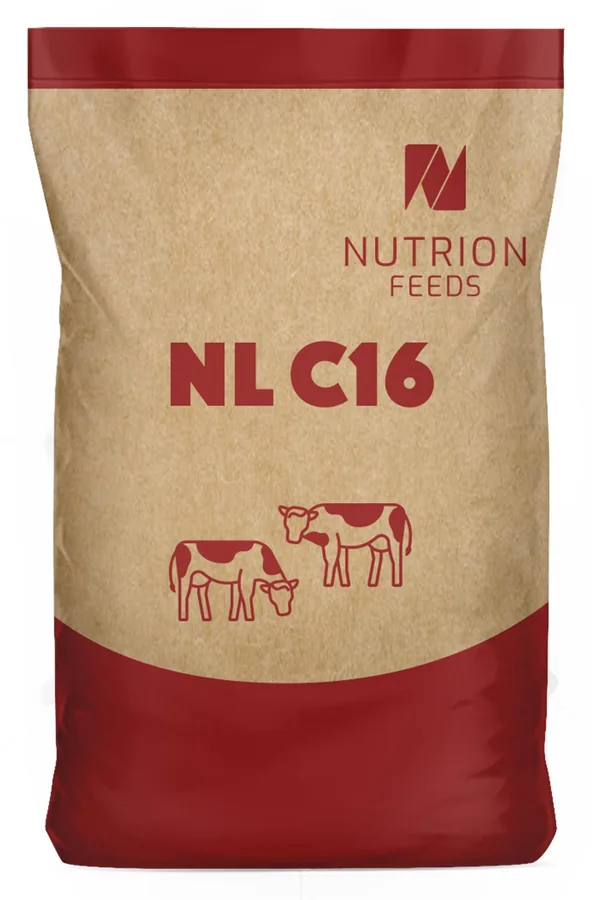
C16:0-rich fatty acids
How it is protected
Saturated, with a high melting point, so rumen microbes leave it largely alone.
Fatty acids
C16:0
Often chosen for
Raising milk-fat yield. C16:0 has the clearest research record here.
Our gradeNL C16›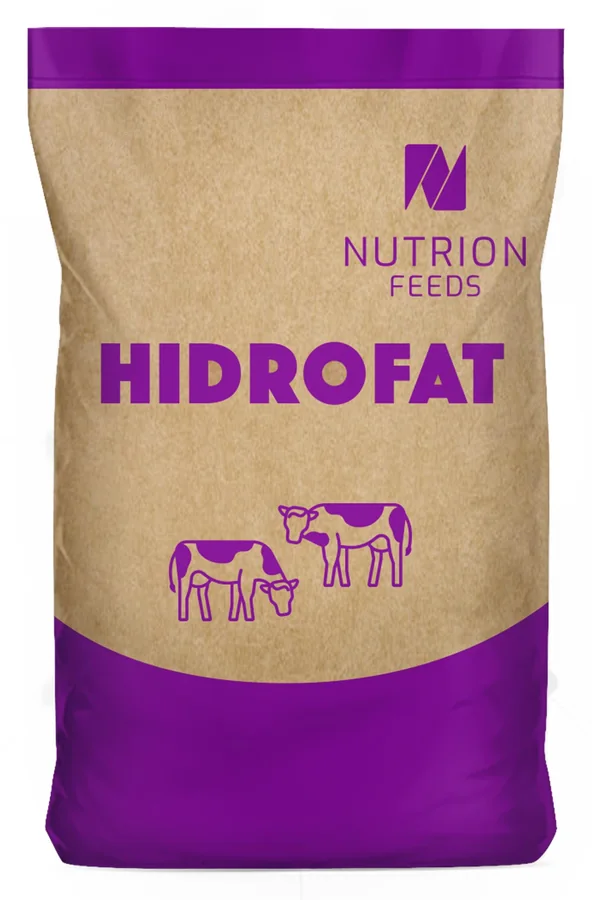
fully saturated fat
How it is protected
Hydrogenation makes the fat fully saturated and firm at rumen temperature.
Fatty acids
C16:0C18:0
Often chosen for
Concentrated energy. C18:0 is usually less digestible than C16:0.
Our gradeHIDROFAT›The one that matches your goal. Start with the result you want to move, then choose the fatty acid.
Calcium salts of palm fatty acids supply a broad mix of C16:0 and C18:1. A common choice from calving to peak lactation.
RUMINERC16:0 (palmitic acid) has the clearest research record for raising milk-fat yield, compared with C18:0.
NL C16Adding C18:1 to a C16:0 blend raised milk yield and reduced body-weight loss in one early-lactation trial.
RUMINER gradesFully saturated fats are dense and easy to handle. C18:0 is usually less digestible than C16:0, so check the profile.
HIDROFATCalcium salts of fatty acids
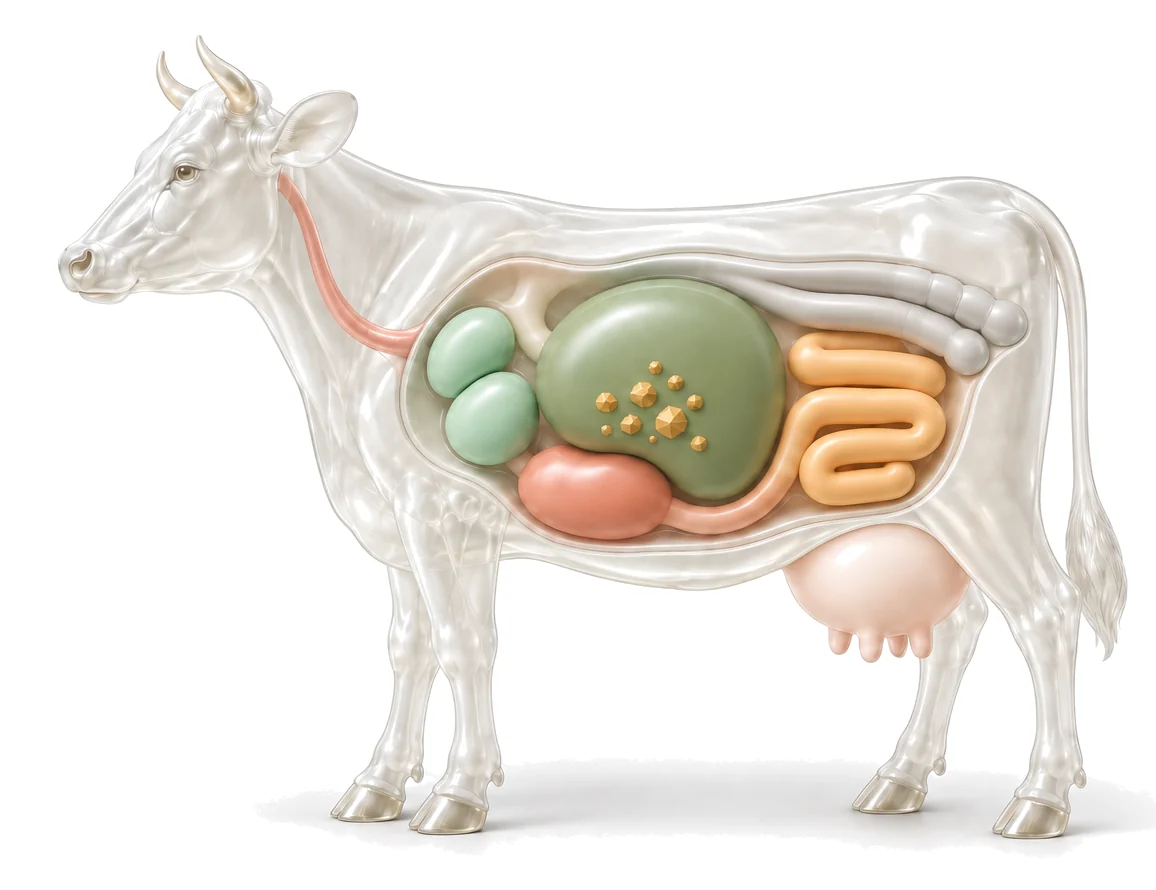
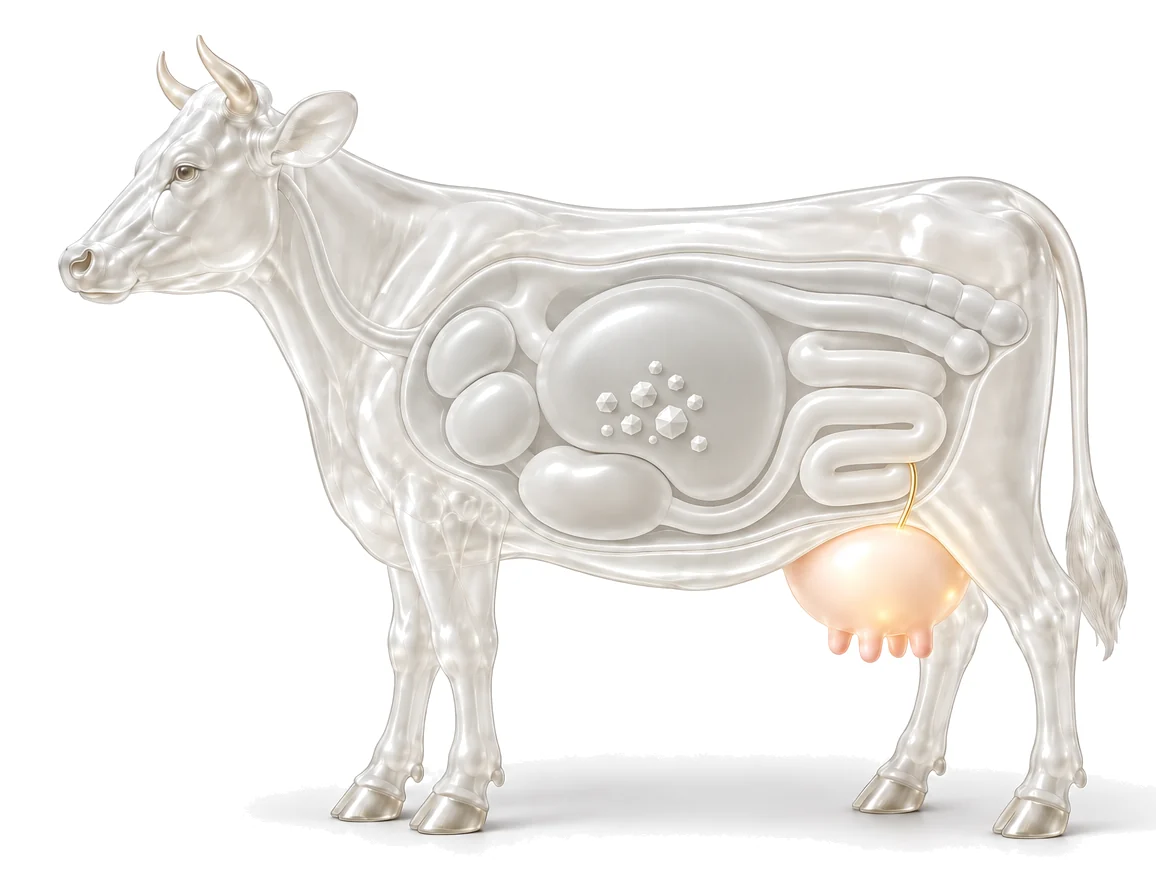
Follow a calcium salt through the cow.
Rumen-protected fat
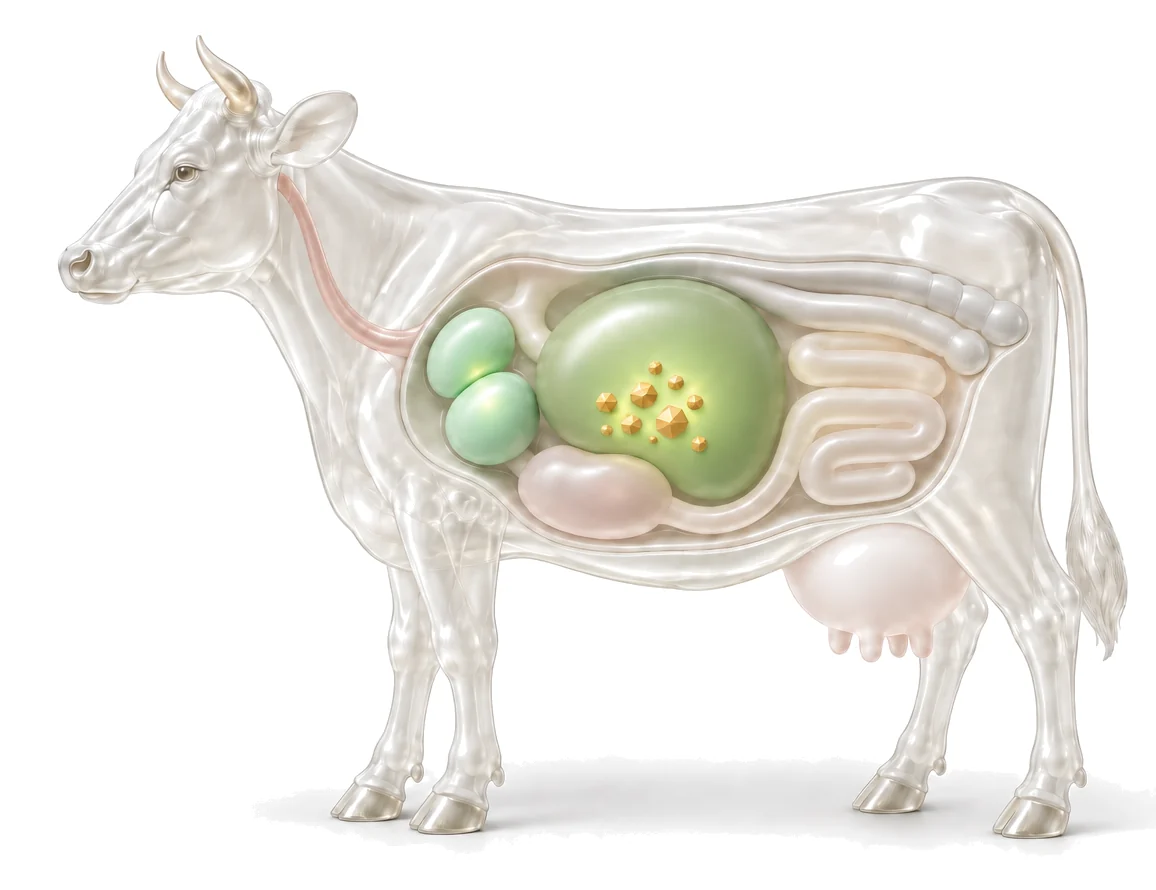
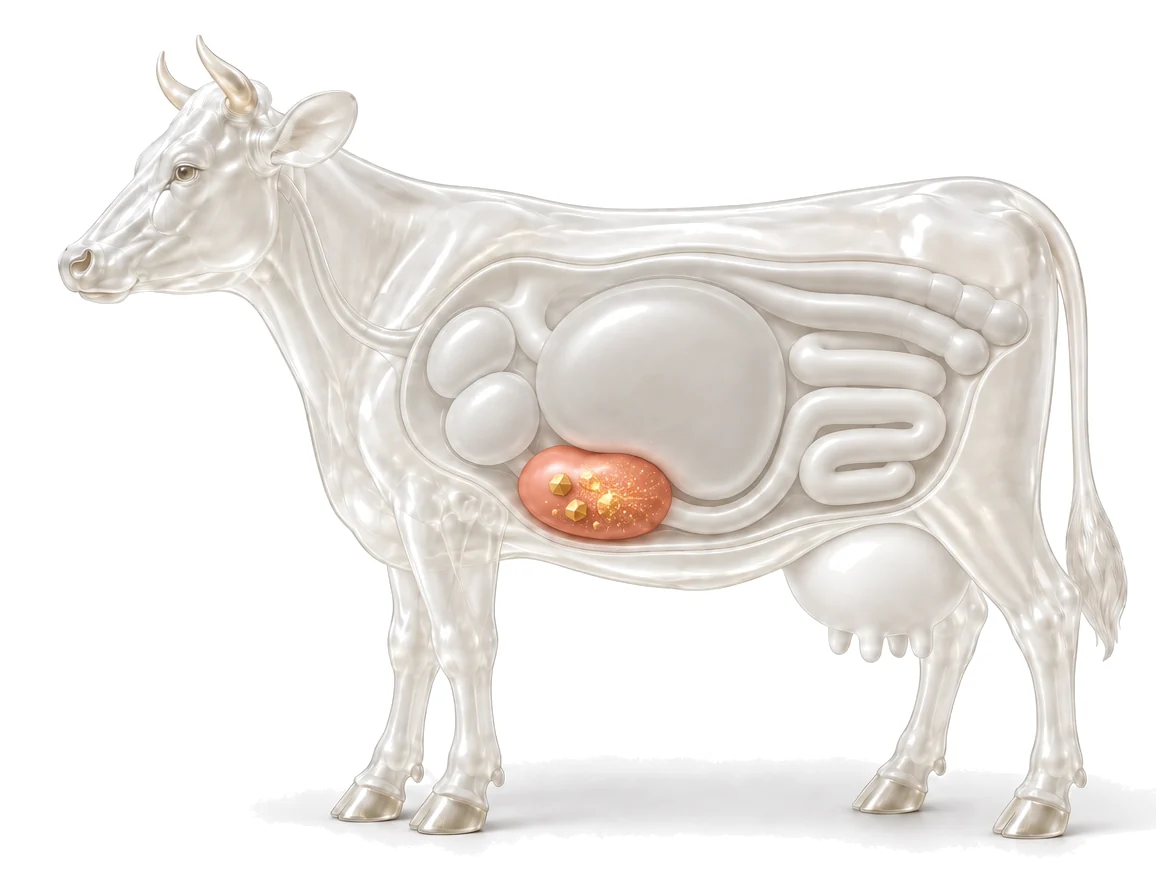
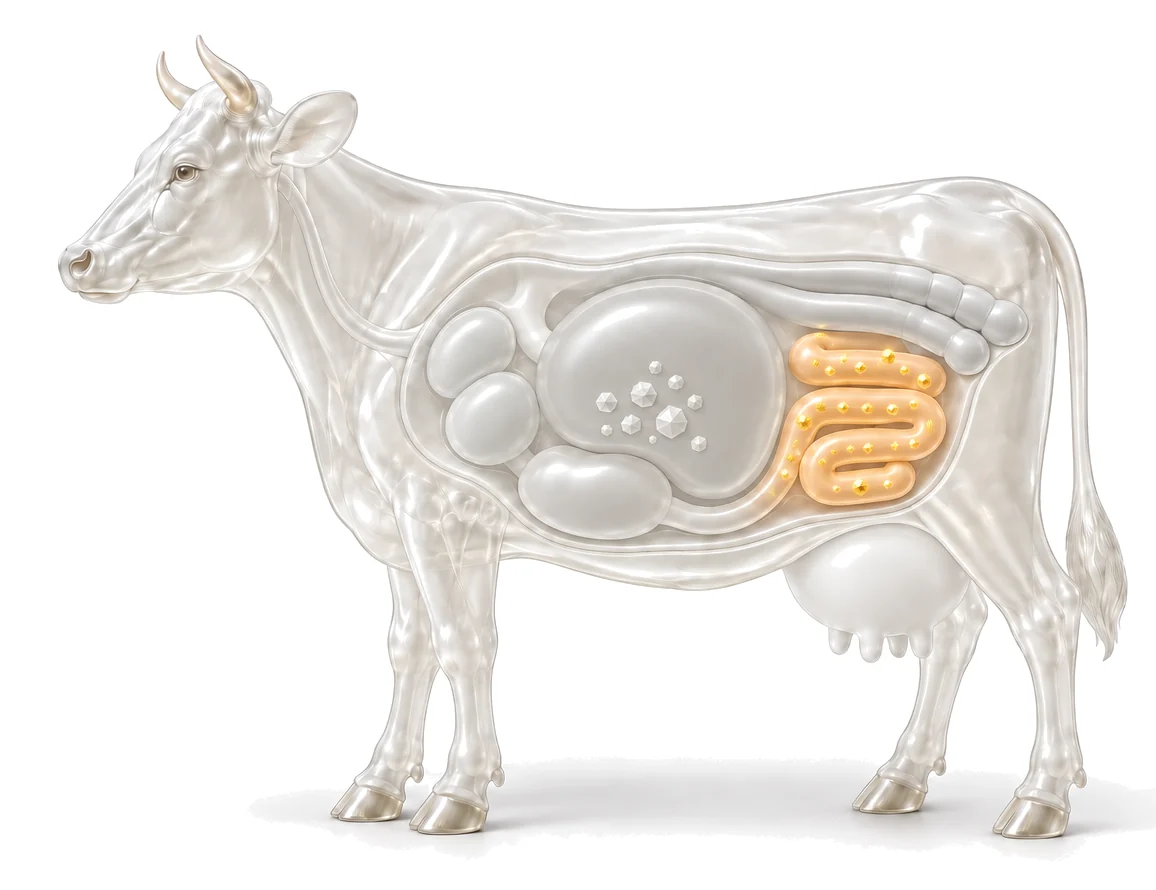
One feed, four stops. Each one does a different job.
1Rumen
Rumen microbes digest fibre. The calcium salt stays largely intact here, so it doesn’t get in their way.
2Abomasum
In the acidic true stomach, the salt splits into free fatty acids and calcium.
3Small intestine
Bile and enzymes carry the fatty acids to the gut wall, where they are absorbed into the blood.
4Udder
Taken up by the udder and built into milk fat. C16:0 has the clearest research record for raising milk-fat yield.
In one trial, more C18:1 in a C16:0 blend raised milk yield and reduced body-weight loss in cows about two months into lactation. Energy-corrected milk did not change.Hu et al., Journal of Dairy Science, 2024. Results depend on ration and stage.
Simplified illustration. Protection in the rumen is high but not absolute, and responses depend on the ration, stage of lactation and dose.
Our bypass fats are produced in our own animal feed plants in Indonesia, from fatty acids made in our oleochemical plants.
Because the whole chain is ours, we can hold the specification from batch to batch and adjust the profile when your ration needs it.
Research
Three trials, three questions. Choose one.
Grazing cows after calving got 0, 0.2, 0.4 or 0.6 kg/day of calcium salts. Milk rose steadily with dose while intake fell, so each kilo of feed made more milk. The benefit carried over later into lactation.
Journal of Dairy Science, 2022 · 0 vs 0.6 kg/dayTwo carbons make a difference. Fed side by side, palmitic acid increased milk-fat yield and feed efficiency compared with stearic acid, in cows across different production levels.
Rico et al., Journal of Dairy Science, 2014Dairy cows were fed calcium salts at 1% of the diet. Estimated methane per kg of feed eaten tended to be lower and rumen fermentation shifted towards propionate. Milk yield did not change. A small study, so treat it as an early signal rather than a proven reduction.
Kamiya et al., Animal Science Journal, 2025 · 10 Holstein cows, crossover designResults from individual trials, not a guarantee for every herd. Full references are listed at the end of this page.
0.5–3%of ration dry matter, where most farms that use supplemental fat sit
There is no single right rate. It depends on the type of bypass fat, the cow and the fat already in the ration. In research, calcium salts are often tested at 0.2 to 0.6 kg per cow per day.
Bypass fat, also called rumen-protected fat, is a fat supplement made to pass through the rumen largely unchanged. It is then digested and absorbed in the small intestine. It adds concentrated energy to a dairy ration without disturbing fibre digestion in the rumen.
Yes. Both names describe fats that are protected from breakdown in the rumen. The main types are calcium salts of fatty acids, high-palmitic (C16:0) fats and hydrogenated fats.
It depends on the result you want. Calcium salts are a common choice for overall energy and milk yield, especially in early lactation. High-palmitic C16:0 fats have the clearest research record for raising milk-fat yield. Blends of C16:0 and C18:1 are used when body condition and energy balance also matter.
There is no single rate. It depends on the type of bypass fat, milk yield, stage of lactation and the fat already in the ration, so it should be set by your nutritionist. Most dairy farms that use supplemental fat include it at about 0.5 to 3% of ration dry matter, and calcium salts are often tested at 0.2 to 0.6 kg per cow per day in research. Introduce it gradually.
It is most often fed from calving through early and peak lactation, when cows cannot eat enough to meet their energy needs. It is also used in high-producing herds and in hot weather, when cows tend to eat less and a denser ration helps.
It can. In one 2022 trial in grazing cows, the highest calcium-salt dose lowered dry-matter intake by about 1.2 kg per day, while milk yield rose by about 4.1 kg per day, so feed efficiency improved. The effect depends on the type of fat, the dose and the ration, which is why the rate should be set against the whole ration.
Yes. Rumen-protected fats are also used for beef cattle, buffalo and small ruminants. The rate and the best type depend on the species and the production goal.
Protected fat passes the rumen largely unfermented, so it adds little to methane production. When the extra energy supports more milk, the methane a cow produces is shared across more litres. That means lower methane per litre of milk, rather than a fixed reduction per cow.
Price depends on the type, grade, volume and destination. Contact us with your requirement and we will send a quotation and a spec sheet.
Tell us the species, your goal and your rough volume. Spec sheets are available on request.
Or email [email protected]
General information only, not a feeding recommendation for a specific herd. Rates and products should be set with your nutritionist.