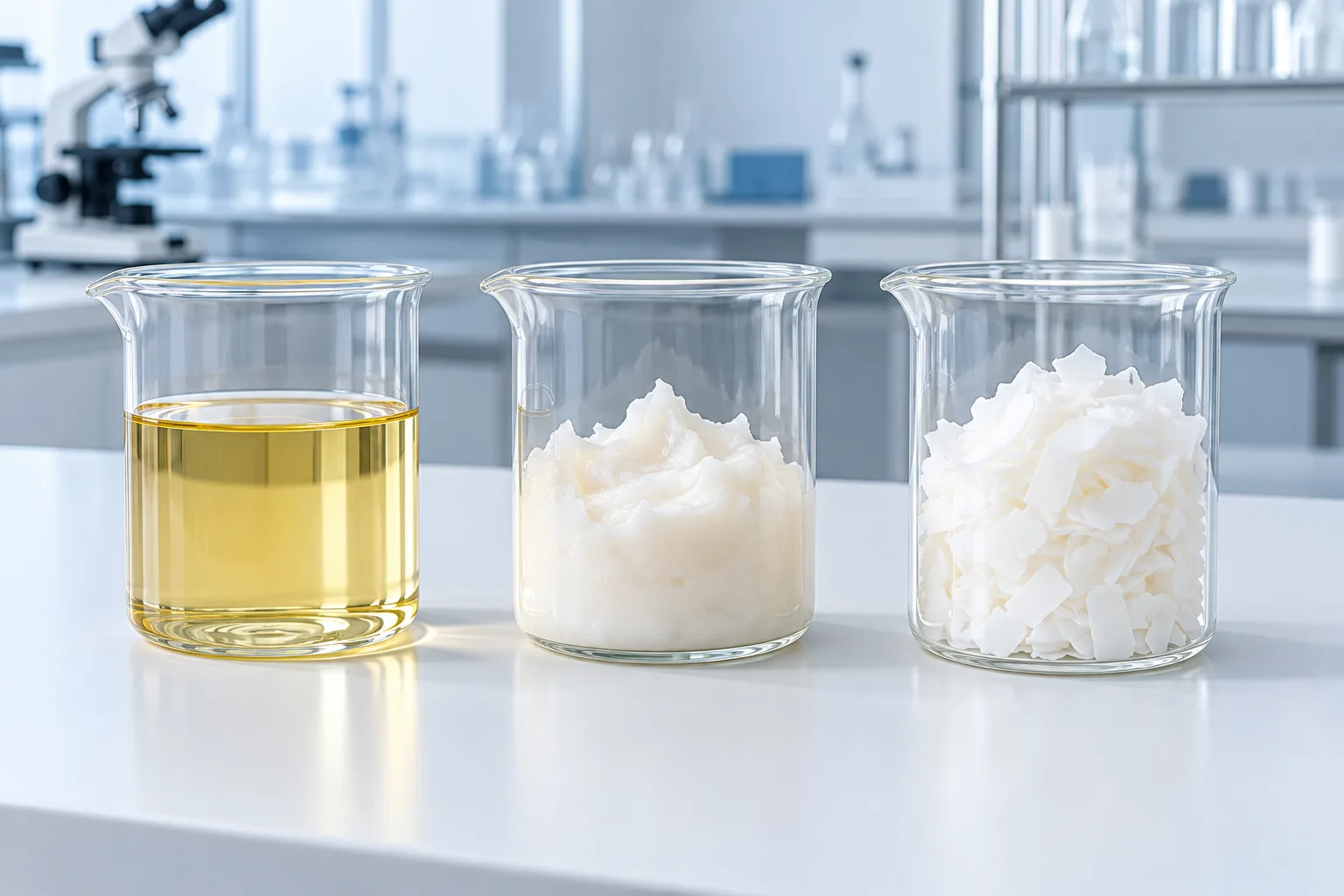
Bio-Based Lubricants: Balance Lubricity and Stability
Bio-based origin helps. It does not replace testing in the real machine.
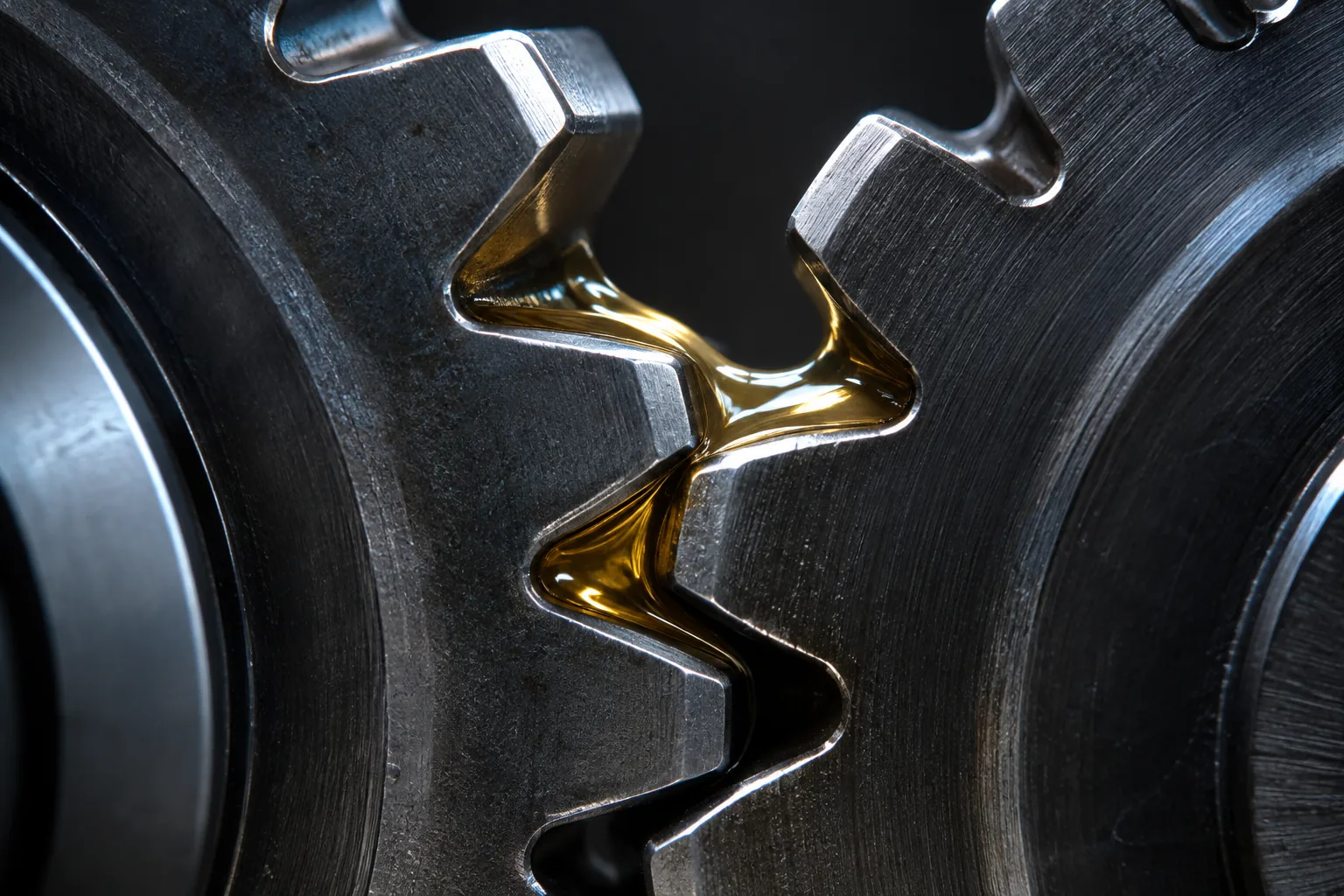
Lubricants made from vegetable oils and their esters are gaining ground, especially where a leak could reach soil or water. They lubricate well, but they have weaknesses that need to be managed.
This article explains the trade-offs behind bio-based lubricants and how to qualify one for real equipment.
Strengths and limits.
Plant-based esters grip metal and hold viscosity well. Oxidation and cold flow are the weak spots.
The ester groups in vegetable oils are attracted to metal surfaces, which helps them form a protective film, and many keep their viscosity well as temperature changes. On the other hand, they oxidise more readily than mineral or synthetic oils and can thicken or crystallise in the cold.
- Additives or chemical modification often close the gap.1
Balance the double bonds.
More double bonds improve cold flow but weaken oxidation stability.
Double bonds sit at the centre of this trade-off. More of them keep the oil liquid at low temperatures but make it oxidise faster; fewer of them improve stability but worsen cold flow. Formulators shift the balance through the choice of fatty-acid profile, by converting the oil into esters, or with antioxidants and pour-point additives.
- Esterification, additives or a different profile can shift the balance.1
Renewable content, biodegradability, toxicity and lifecycle impact are different claims.
Judge the complete fluid.
Base stock, additives and seals are qualified together.
A lubricant is a complete system of base oil, additives and the machine it runs in. Laboratory tests are a good screen for viscosity, oxidation, wear and pour point, but they cannot prove service life. Seal compatibility, mixing with the old fluid and the real temperatures and loads have to be checked in a field trial.
- Short lab tests do not prove service life.
Separate the environmental claims.
Four claims, four kinds of evidence.
Four environmental claims are often mixed up. Bio-based describes where the carbon came from. Biodegradable describes how quickly the fluid breaks down, which is measured with a standard test. Low toxicity and lower lifecycle carbon each need their own evidence, and passing one test does not prove the others.
- Passing a biodegradation test proves one property, not overall superiority.2
In short.
Bio-based lubricants can perform well when the formulation is matched to the duty. Start with the machine's demands, balance cold flow against oxidation, qualify the complete fluid in real service and support each environmental claim with its own evidence.
Before you choose.
- 1Define the duty.
- 2Select the base-stock structure.
- 3Test oxidation and cold flow.
- 4Check seal compatibility.
- 5Validate in service.
Bio-based base stocks offer lubricity and viscosity behaviour; oxidation and cold flow may need formulation work.
Chemical modification and additives to fix stability, with more application-specific environmental testing.
Begin with the duty. Test the whole formulation.
Talk to our teamReferences (2)
- Hamnas, A. & Unnikrishnan, G. (2023). Bio-lubricants from vegetable oils: Characterization, modifications, applications and challenges. Renewable and Sustainable Energy Reviews, 182, 113413. doi.org/10.1016/j.rser.2023.113413
- ASTM D5864: Standard test method for determining aerobic aquatic biodegradation of lubricants or their components. www.astm.org/d5864-23.html
General principles for formulators. Not recommendations for a particular product, process or herd.