C8 to C12. Small Chains, Different Functions.
C8:0, C10:0 and C12:0 share one label. They do not share one behaviour.
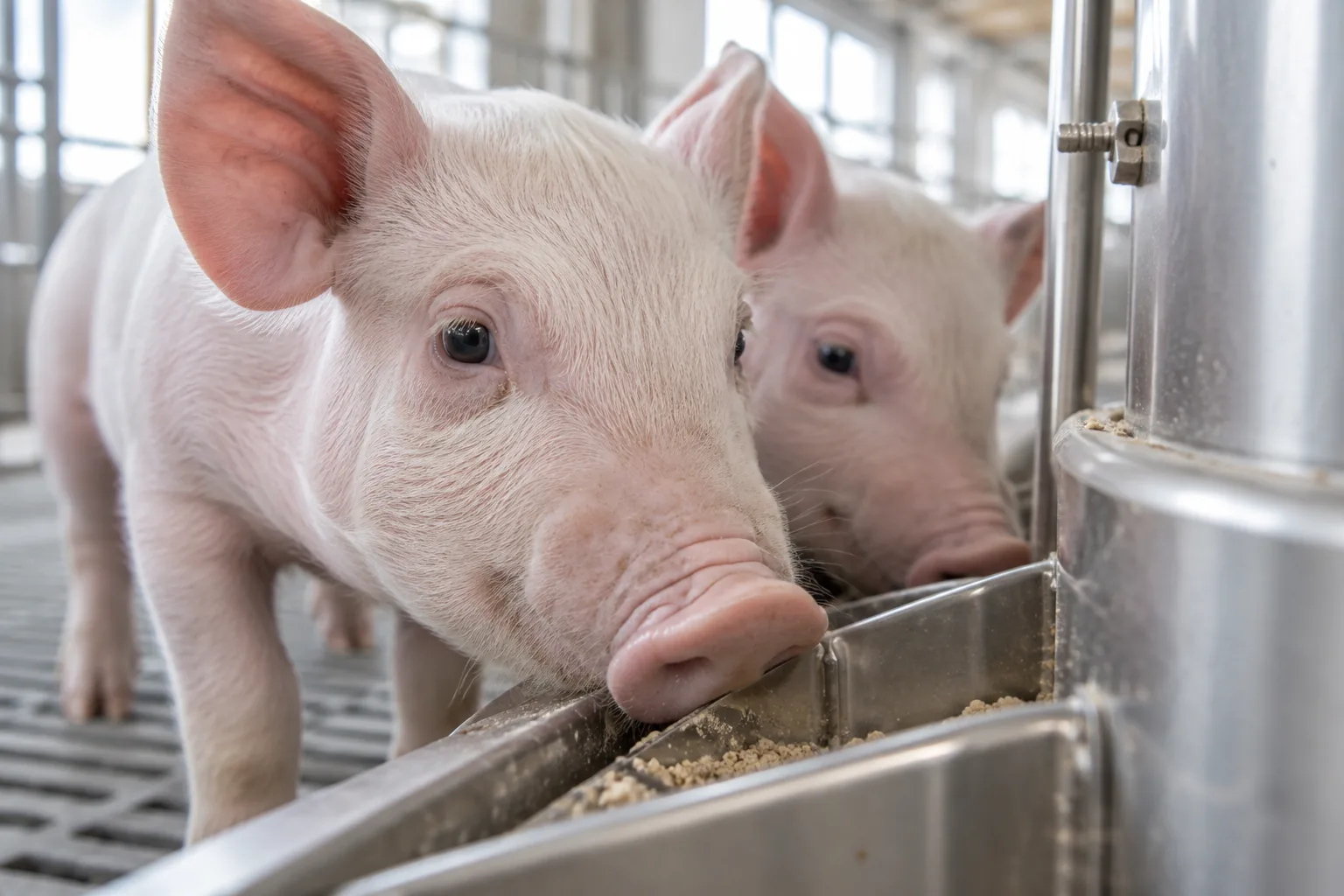
Medium-chain fatty acids (MCFA) are widely used in pig and poultry feeds, both as a quick source of energy and for their effects in the gut. On a specification sheet they often appear as a single figure: total MCFA.
That figure hides three different molecules. Caprylic (C8:0), capric (C10:0) and lauric (C12:0) acid differ in how they dissolve, how they are absorbed and how they act on gut microbes. This article explains those differences and what to check before choosing an MCFA source.
One label. Three molecules.
We group C8:0 to C12:0 as medium-chain fatty acids (MCFA). Within that group, each chain handles differently.
The three chains differ by only a few carbon atoms, but that is enough to change their behaviour. C8:0 and C10:0 mix more readily with water, are digested quickly and, in pigs and poultry, tend to travel directly to the liver. C12:0 is more fat-like and behaves closer to the long-chain fatty acids. Palm kernel and coconut oil are rich natural sources of it.
Fast energy depends on the form.
In broiler starters, the same C12-rich chains gave different results depending on the oil they came in.
The oil that carries the chains matters as much as the chains themselves. In a 2026 broiler study, palm kernel oil and insect larvae oil, both rich in C12:0 and low in free fatty acids, were digested about as well as soybean oil. A palm kernel fatty-acid distillate, with far more free fatty acids and long saturated chains, did worse. Several factors changed at once, so the study shows why composition alone is not a full specification.
- Several factors differed at once, so free-fatty-acid level alone is not proven as the cause.3
- A C12 percentage alone is not a full ingredient specification.
A C12-rich ingredient is not fully described by its C12 percentage.
Gut effects are formulation-specific.
Activity in a lab dish does not guarantee the same effect in the animal.
MCFA are also studied for their effects on gut microbes. A strong result in the laboratory does not guarantee the same effect in the animal, because the feed, digestion and absorption all change how much fatty acid reaches the part of the gut that matters. The molecular form, whether free acid, triglyceride or monoglyceride, changes the answer again.
Ruminants add the rumen.
Rumen microbes change the exposure first, so pig and poultry results do not carry over.
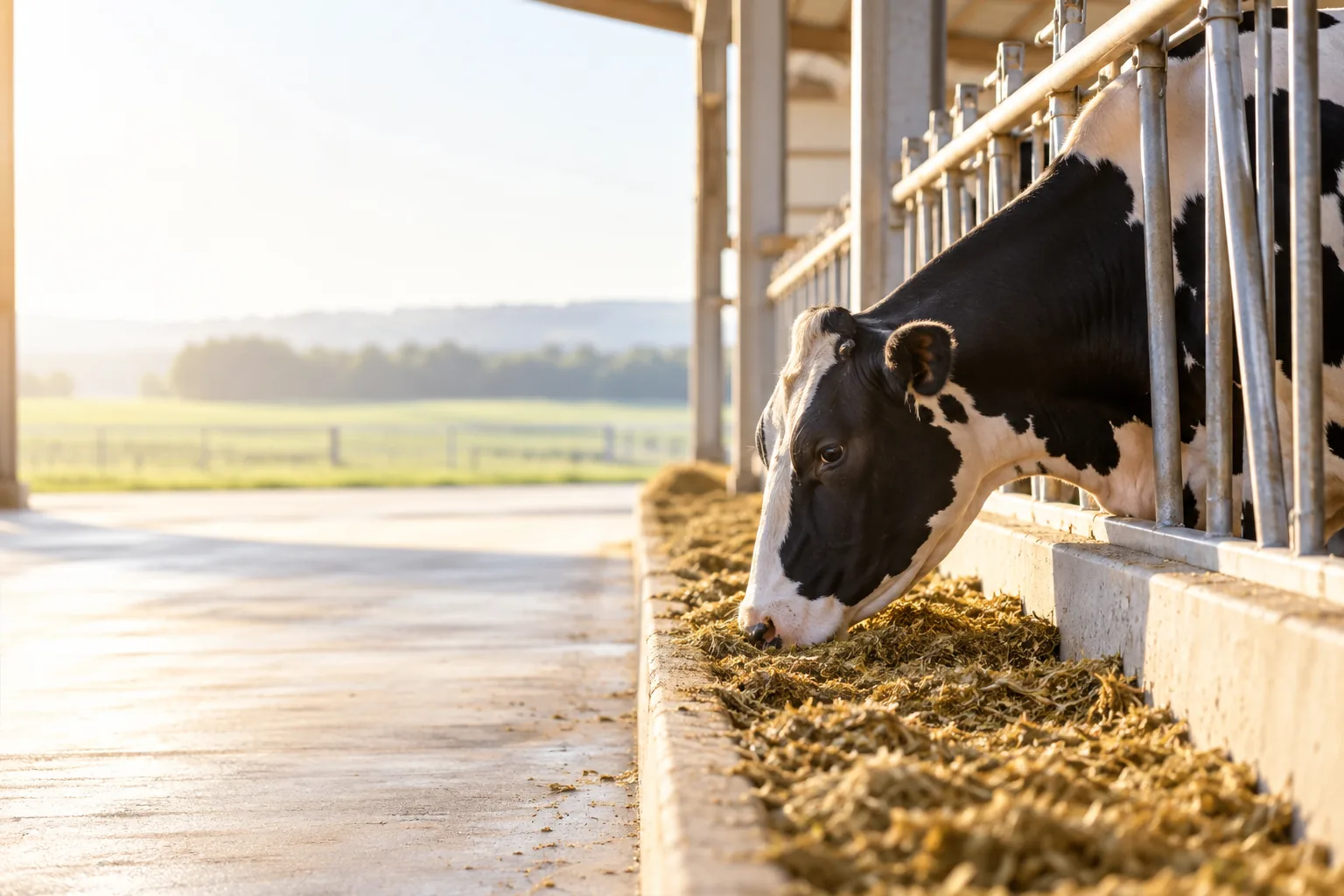
In cattle, feed passes through the rumen before it reaches the intestine, and rumen microbes act on the fat first. Results from pigs and poultry therefore do not transfer directly. A small 2024 study in finishing bulls found that a C10 supplement tended to increase feed intake, but none of the three chains changed daily gain or feed conversion.
- A useful signal, not proof of a production benefit.5
In short.
C8:0, C10:0 and C12:0 share a name but not a behaviour. Before choosing an MCFA source, ask which chains it contains and in what proportion, what form they are in and what outcome you want to change. Then look for evidence from the same species and life stage.
Before you choose.
- 1Name the acid and its proportion.
- 2Confirm the form free, ester, salt or glyceride.
- 3Match dose to species and life stage.
- 4Define the endpoint energy, intake, growth or gut.
- 5Treat delivery as part of the design.
C8, C10 and C12 share a grouping but differ in handling. A total-MCFA figure cannot predict energy or performance.
Research is comparing whole lipid sources, free acid versus triglyceride, not composition alone.
Name the chain, the form and the job. Then match the evidence to that exact material.
Talk to our teamReferences (6)
- Lauridsen, C. (2020). Effects of dietary fatty acids on gut health and function of pigs pre- and post-weaning. Journal of Animal Science, 98(4), skaa086. doi.org/10.1093/jas/skaa086
- Jackman, J. A., Boyd, R. D. & Elrod, C. C. (2020). Medium-chain fatty acids and monoglycerides as feed additives for pig production. Journal of Animal Science and Biotechnology, 11, 44. doi.org/10.1186/s40104-020-00446-1
- Espinosa-de-los-Monteros-Peñafiel, M. et al. (2026). Medium-chain fatty acid-rich oils with varying free fatty acid levels as alternatives to soybean oil in broiler starter diets. Poultry Science, 105(8), 107083. doi.org/10.1016/j.psj.2026.107083
- Gebhardt, J. T. et al. (2020). Evaluation of different blends of medium-chain fatty acids, lactic acid, and monolaurin on nursery pig growth performance. Translational Animal Science, 4(2), 548–557. doi.org/10.1093/tas/txaa024
- Luan, J. et al. (2024). Medium-chain fatty acid triglycerides improve feed intake and oxidative stress of finishing bulls. Microbiome, 12, 230. doi.org/10.1186/s40168-024-01946-2
- Ee, H. W., Ramiah, S. K., Mookiah, S. & Idrus, Z. (2024). Effects of medium-chain fatty acids on growth performance, microbial attributes, and fat deposition in broiler chicken. Czech Journal of Animal Science, 69(4). doi.org/10.17221/175/2023-CJAS
General principles for formulators. Not recommendations for a particular product, process or herd.